Category Archives: Financial Independence

financial freedom

Forget Simon, do what Buffet says

Warren Buffet is the greatest investor of all time.

He has a net worth of over $70 billion dollars.

It is safe to say that he knows what he’s doing. And if you listen to him, you are likely going to be better off than the average joes.

Some of his best quotes on life you can find here  Warren Buffet quotes

Here are some of my favorite quotes from the wisdom of the Oracle of Omaha, Warren Buffet.

Rule No.1: Never lose money. Rule No.2: Never forget rule No.1.

Focus on value over price. If you do not want to lose money, then limit spending and find ways to save and invest to grow your money.

It takes 20 years to build a reputation and five minutes to ruin it. If you think about that, you’ll do things differently.

If you wouldn’t do it when being recorded, then you probably shouldn’t be doing it. Don’t do anything you don’t want on the front page of a newspaper.

Someone’s sitting in the shade today because someone planted a tree a long time ago.

All good things need time.

Risk comes from not knowing what you’re doing.

It was reported that Buffet spends 80 percent of his day reading. He has knowledge and uses it to his advantage. Reading, studying, and learning are the only ways to limit risk. You can put all your eggs in one or a few baskets if you know what you are doing.

You only have to do a very few things right in your life so long as you don’t do too many things wrong.

Staying away from negative behaviors and activities in vices such as drinking, smoking, and gambling can make sure that you will not hurt your chances to become wealthy.

We simply attempt to be fearful when others are greedy and to be greedy only when others are fearful.

Don’t follow the crowds. Use your knowledge to make informed decisions. When others say the sky is falling then it is time to invest.

Honesty is a very expensive gift – don’t expect it from cheap people.

People that look to cut corners often lack integrity. This could hurt your bottom-line.  If you skip all the rungs on the ladder to success and wealth, you also miss the lessons along the way to stay successful and wealthy.

If you’re in the luckiest 1 percent of humanity, you owe it to the rest of humanity to think about the other 99 percent.

Helping others is its own reward. It is a moral imperative to help those who need it. Helping the bottom 4 billion at the economic pyramid has far reaching and lasting positive effects on humanity.

Too often, a vast collection of possessions ends up possessing its owner. The asset I most value, aside from health, is interesting, diverse, and long-standing friends.

Life is about building relationships. Treat them well and you will get that treatment back in return. People are always more important than things.

You can’t make a good deal with a bad person.

There is no value you can place upon a good person or friend. Stay away from negative or bad people because they can’t be reasoned with to do the right thing.

Final Remarks. In this life, it can’t be all science and no philosophy. Humanity is a part of everything you do. Your highest civilian duty is to be humane. If you want to build your wealth, it is simple: help others.
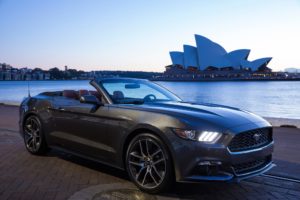
If you want to be wealthy, drive a Ford

In its first three months on sale in Australia, Mustang ranks as the best-selling sports coupe. Demand is so strong, the pony car was initially sold out through 2017, but an additional 2,000 Mustangs are slated to ship Down Under by the end of this year.

While on my own journey towards wealth accumulation, I notice that one of the biggest budget busters for families are automobiles. Now, I enjoy a nice fancy new car like the next person but to truly enjoy your car, I believe you have to be able to afford it and this includes the maintenance not just gas. Car ownership is more than just the purchase price. Forbes reported that the average U.S. cost of a vehicle in January 2016 was $34,112 – according to Kelley Blue Book (KBB).

A car is a car of course, of course. I know that new car smell is exhilarating. You slide in, adjust the seat, feel the smooth touch of the leather and sigh “I’m home.” One car is just as good as any other, right? However, we know that isn’t the case.

The most expensive car must be the better car because everyone knows you get what you pay for. Just cause the sticker price is higher does not make it the best vehicle or the right one for you.  Let’s go down the list of what people are looking for in a car to do some comparison shopping.

Price. The first thing that comes to mind when buying a car is the cost. Understandably, so because if you decide to go with the fully loaded Range Rover versus a Ford Explorer, you better be prepared to live in it should you be unable to pay for both it and the rent. Doing an online search, I was able to look up the prices of both above-mentioned vehicles; a 2017 Ford Explorer could go for $31,160 and a 2016 Land Rover Range Rover costs…wait for it… a whopping $199,495!

There are some houses on the market that do not cost as much as a Range Rover. I also did the math for monthly payments. The Ford with a 3% interest rate would cost $509 per month for a grand total of $36,648 over 72 months. That’s 6 years! You know what could happen in 6 years; well neither do I, I’m not a fortune teller. Anything could happen, that’s why it’s best to keep car payments and terms as low as possible to be prepared for any unforeseen events.

As for the Range Rover, with the same terms as above, would cost $3,083 per month! There are mortgages for less. This is based on using the general 72-month term car dealers like to throw out there. For a final cost of $$221,976.

Just to put this into perspective, if you max out your 401(k) for 6 years, which is $18,000 for 2016, at a rate of return (ROI) of 6% annually you would have $125,697 in retirement savings.

Please don’t pick a car because of the after purchase champagne toast at one dealership versus the $50 gas card at another.

Miles Per Gallon. The Miles per gallon (mpg) can be especially important for anyone who does a lot of traveling. Even though gasoline prices have dropped over the past several years, it’s still not cheap to own a car or truck. According to Forbes, KBB stated that the lowest costs of ownership vehicles were Hyundai, Acura, General Motors, Toyota/Lexus and Ford.

Insurance. Indirect costs of ownership like insurance also need to be factored into the cost of buying. Luxury cars costs more to maintain and are more expensive to insure. Full coverage is the standard when buying new or used. These costs add up. Buying a cheaper car means saving on insurance and ultimately can be mitigated to your emergency savings or retirement account.

Safety. Let’s be honest. There are some vehicles that do not have the best safety features. If your new teenage driver is an eager beaver to get behind the wheel, then you may want to make sure your insured up to the hilt and that the car has airbags and anti-lock brakes. It is far more important to have a car that will stop on command than go from zero to 60 in 10 seconds.

The morale of this story: Pay smart, Drive safe.

Banking at credit unions versus banks – the great debate

Banks are known for high interest rates and exorbitant fees. You need to tread very carefully to avoid late fees, overdraft fees and high interest charges if you want to stay out of debt and build wealth.

I have had my personal share of experiences that I would sooner like to forget but they were also great lessons learned. After paying huge fees, one time I even paid for an overdraft fee of $25 for a $2.00 charge, I knew I had to stop over drafting. This actually happened multiple times. So I eventually said enough is enough and I switched from a bank to a credit union.

Credit unions are known for lower interest rates and willingness to work with those of modest incomes. I even learned that credit unions are legally not able to charge more than 18 percent interest rate cap on loans and credit cards per the National Credit Union Association, as long as you pay on-time. Works for me.

It has been over 7 or 8 years since I made the switch to exclusively use credit unions and I couldn’t be happier. I even over drafted one time and as a courtesy this was refunded to me. In contrast, this did not happen with my bank.

Not only was I paying less in interest but I also was able to avoid over drafts completely by signing up for protection with linking my savings account and/or credit card. Previously, I was not made aware of both options with the bank I was with.

In addition, there was a time I was able to do cash advances inside the branch of any bank. Then one day I went to one and they were like last month they changed the policy and no longer did bank advances. How is a consumer to know? I could have been stuck on the highway with a flat and needed the cash but nope. Sorry kid, your out of luck.

Another bank said they too changed their policy and only do cash advances for members. A third bank said they would do it but there was a limit of one thousand dollars for non-members. Then after conferring with her manager informed me they could not do it because the back of my card was not signed. Even though I had identification. I signed the back of the card at the counter and then left.

Finally, I went to my local credit union (where I was a member btw). Not only were they willing to do a cash advance on my Visa but there was no issue of any kind. I was able to get my funds in under five minutes.

From this experience, I learned that you have to handle your affairs and conduct business very carefully. I saw that companies and banks or credit unions could change their policies at any time without anyone knowing. What you are able to do on Monday may be cancelled by Friday. Best to just keep a cash cushion in case of emergencies such as money in savings because financial institutions may consider you and your credit card as personae no grata (unwelcome or not appreciated). This is all done at their leisure so make sure you always have a back-up plan.

Build wealth on a budget

Get rich by leveraging what you know and using what you’ve got. I have read hundreds of articles, books, and journals about money and finance. The common theme is to become an expert in one subject area and use this expertise to create cash flow by selling your skills and knowledge.

This is a glimpse of what I have learned…yesterday. That’s right, yesterday! There is a plethora of information out there on finances. For example, there are numerous mobile apps you can use to earn extra money and one just for locking your Android smartphone! You literally just slide your screen to unlock your phone and make a profit. There are also various budget apps you can use for free or a small fee to track your spending (no more excel spreadsheets) and let technology do all the work for you.

Even after over eight years of learning about money; I still learn new things about finances.  For instance, the following is just an inkling of what I have learned over the years:

  1. Money can help you make better decisions because often times it’s the lack of money that can lead to bad decisions.
  2. Money cannot buy happiness.
  3. Money is the number one reason couples divorce.

Find ways to not only live below your means, but to expand them as well.

If you are good at writing, use this skill to build additional income as a freelance writer. Like to cook. Earn money on the side selling baked goods. Know your way around the city. Become a driver. Like being a homeowner and dream of being a landlord. Start by buying one home and renting it out.

These are just a few things you can do to earn income. The goal is to expand your means. Increase the distance from the amount you earn and spend.

For example, if you earn (that’s right because you don’t make money you earn it) $4000 a month and have expenses of $2500 a month, then invest the difference of $1500. The goal is to earn enough passive income to be able to live off it for the rest of your life. Once you hit your target number your working days are over.

In order to achieve this, you must limit debt and borrowing. Too much can have a negative impact on your savings goals. If I had to put debt in order of importance for payoff, it would look like this:

  • Payday Loans
  • Credit cards
  • Personal Loans
  • Auto Loans
  • Student Loans
  • Mortgage Loans

The first two come with high interest rates and fees. I have had the unpleasant experience of both types of debt.  I decided to get serious about debt repayment and once I got my tax refund I paid off the payday and auto loans. I used a zero percent credit card to pay off my personal loan. From there I used the savings from paying off my other debts to pay down and off my credit cards. I am not so worried about the student loans and the mortgage because at least I can deduct the interest from my taxes on my tax return. However, this is not a time to rest on my laurels. The goal is to get out of all debt ASAP to be able to save.

Emergency fund. My suggestion would be to have a savings account that is just for emergencies. The ultimate goal is to have at least one year of expenses saved. However, just to start and have some funds in case small emergencies happen, i.e., leaky faucet, car repair or medical bill you could have $500 to $800 readily available. This will alleviate some stress as opposed to having no savings.

Simple Math can lead to Riches.

Savings Tracker

Amount per month         Year One             Year Five              Year Ten

$100                                      $1,200                  $6,000                   $12,000

$500                                      $6,000                 $30,000                $60,000

$1,000                                  $12,000                $60,000                $120,000

Looking at the numbers above, you can see that after five years in any scenario you could use the amount as the down payment on a home. After 10 years of saving, you could buy a car outright or pay off part of a mortgage depending on what you owe or even start a business. However, savings like this don’t come easy. You must be disciplined enough to pay off debt so that you can maximize saving. But just look at the possibilities. They are endless!

This is my motto; Cash is King. Leads to prosperity. Debt leads to poverty and can cause degradation of character. Just choose cash.

A car and nothing more

Outside of a home, one of the biggest expenses for most people is a car. A car can help you get to work to provide for your family, allow you travel long distances at your leisure, and give you a sense of freedom. However, spending too much on cars can lead to debt accumulation and this could negatively impact your net worth.

I call those who would rather drive the fancy car and have no emergency saving – Autoholics.  My definition is the buying of automobiles that are more than you can reasonably afford which results in problems.

I have known people whom both would lease and buy expensive vehicles. To most of their chagrin, the price of that freedom on four wheels was not worth it.

The moment you drive a car off the lot it goes down in value. Therefore, if you brought the car back within 1 hour of purchase the car would be worth less than what you just paid. Because of this a car is a depreciating asset, and must be chosen carefully to avoid having consistent negative equity in a vehicle over the course of your entire driving career.

If people are not careful, you could easily spend anywhere from $50,000 to a couple hundred grand on cars in a lifespan.  Those numbers do not include maintenance. That’s right, just the sticker price!

I am not saying not to buy a car. What I am saying is to choose what cars you buy carefully as you do not want to have a car parked in your garage that you cannot afford to fix because the repairs cost $8,000. And that number is not a typo, I actually knew someone who owned a BMW and that was the repair cost.

I have seen people paying $300, $400, $500, or even $600 car notes for five or more years. I actually know someone who has had a car payment almost her entire adult life. If you added those amounts up, it would be some pretty big numbers.

If you were to invest $100,000 in the stock market, with a return of 8%, you would have a million dollars in 30 years.  Even a $10,000 investment would net you $100,000.

With the average price of a car, even used, being $10,000-$20,000 thousand dollars it is worth considering cheaper alternatives. When the goal is to build wealth and have financial independence, then instead of choosing an expensive car go for the one that is more practical but still looks pretty decent on a postcard.  But the best looking car is the one that’s paid for no matter what brand it is.

Money and Relationships…3, 2, 1

And here we go. Date the guy with the nice home instead of the nice car. That’s my advice.

Growing up, my father said my grandmother would say that a man should have a place to put his family. Simply put, if you want a family, then you should have a home for them. It doesn’t have to be a mini McMansion, but it can’t be a cracker jack box.

Will the real estate holder, please stand up? I have actually known some men to prefer a fancy set of wheels as opposed to owning their own piece of property. I get it. Cars mean freedom and to some that they had arrived at adulthood. However, from my experience it’s the guys with the homes that tend to stay in longer, better relationships. Maybe, being a home owner is something to aspire to.

Vanity hates loneliness.  I used to work with a guy that drove a pretty swanky BMW. The sticker price was between $40,000-$50,000. He lived in a one-bedroom apartment in a sketchy neighborhood. He was more concerned with looking good and cool gadgets than his net worth. The few relationships he had were terrible. However, he would be willing to stay in miserable relationships just not to be alone.

Well, one day he lost his job. The car payment was around $500 per month. And unemployment checks weren’t covering it. No savings to speak of. If he had a home, he could have tapped an equity line of credit until times got better or even rented out a room. But those were not options. So what did he do instead. He asked his mother to make his car payments for him.

Safe to say the woman he was seeing at the time didn’t stick around too much longer afterward. Last, I heard or saw of him he had paid off the car after about 7 years, was moving into a bigger apartment in another part of town, and his relationship status was single. And his hobby was…drumroll please…playing video games.

I did suggest to him to enroll in school or some other function that may help him increase his marketability in the employment world. Sadly, he declined.

Homes equal leverage.   A car is a depreciating asset. It usually does not retain its original value, and continues to steadily decrease as the years go by. In contrast, a home is an appreciating asset that increases in value over time. In a 7-year time period, you could build up equity and your home could appreciate in value at the same time.

Let’s say you build $20,000 of equity and your home appreciates 2% a year for a 14% increase in value. If your purchase price was $150,000, then your home is now worth $171,000. For a total equity of $41,000 that you can tap for home repairs, remodeling, etc. That is leverage. You can use this equity to your advantage. What do you get back from paying rent? Zero.

Rent check or car payment. Now that we know what to look for in a guy. Let’s see where the guy without a plan to acquire property could potentially end up without assets of any kind or of substantial worth.

Without his mother paying his car payment, the car may have been repossessed. This ruins your credit, you have no vehicle, can’t get to work, you may lose your job, cashes out retirement account to eat and live, and now you can’t buy a home because you have bad credit and no job.

You may end up living off the side of a freeway off ramp or at the ripe old age of 70 asking customers paper or plastic. Not that there is anything wrong with having a job, but if I have to utter this statement I want it to be my choice and not because I have to.

Working in your golden years to still put food on the table is not how I or anyone should have to spend their retirement. You always want to have the option not to have to work. Or worse yet, from the peanuts you are making, you may be only able to afford Alpo.

Pay on what you own. Paying the mortgage is better than paying for a car. Even though at the end of your loan terms you own an asset, the home can go up in value, house your family, and be used for leverage. Your car can only be used for the latter and for a minimal amount at best.

And so there you have it folks.  If you plan to date, find a partner that understands the value of money and doesn’t just know the price of everything. If you know how to spend, then you should also know how to save.