Tag Archives: Suze Orman

How I made it to $500,000. Checkmate!

It was a cold summer night when I finally got home after running errands.

The fall season was fast approaching. Alas, it was the last days of summer. No more summer concerts or cookouts. It felt so sad to see it come to an end.

Was this how Belly felt in The Summer I Turned Pretty? When Cousins Beach was in the rearview mirror as she drove away. It was time to move forward and move on.

Christmas was three months away. I was trying to get all my holiday preparations organized. Christmas tree. Check. Christmas decorations. Check. Holiday travel plans. Check.

I also had another check to do. My financial checkup. It was time for my monthly fiscal health check.

The stock market had a nice bump happen within the last 30 days. I had also been investing in AI companies for months and some stocks had started to takeoff!

I figured I would piggyback off of Nvidia and invest not only in them, but some of the companies that they were investing in as well. Below is Nvidia stock portfolio.

Stocks Nvidia currently owns

Nvidia started investing in AI stocks at the end of 2023. According to its latest 13-F filing with the Securities and Exchange Commission, which was released weeks ago, it now owns several high profile ones:

  • Applied Digital Corp (APLD), founded in 2001, which builds data centers for customers. Their position is worth $63 million as they own a 3 percent stake in the company with 7 million shares.
  • Arm Holdings (ARM), founded in 1990, which helps semiconductor companies design advanced computing chips. Their position is worth $280 million.
  • CoreWeave (CRWV): Nvidia’s biggest equity holding, this cloud computing company provides GPU-accelerated infrastructure for AI workloads. Nvidia owns 7% of CoreWeave’s Class A shares, according to filings as of June 30, 2025. This stake of approximately 24.3 million shares makes CoreWeave Nvidia’s largest equity holding, at about $900 million.
  • Nano-X Imaging (NNOX), founded in 2018, which develops AI software to improve the efficiency of medical imaging. They did own 59,000 shares. However, they sold its stake in the company in February 2025.
  • Nebius (NBIS) is a technology company that provides artificial intelligence infrastructure. Nvidia owns a minority equity stake in the company, having acquired over 1.19 million shares in late 2024. Nvidia: The Real Winner In The $19B Microsoft/Nebius Deal. It’s stake in the company was $33 million at the end of 2024.
  • Recursion Pharmaceuticals (RXRX), founded in 2013, which is using AI to transform the drug discovery process. Their position is worth $56 million as they own 7.71 million shares.
  • Serve Robotics (SERV), founded in 2017, which develops autonomous delivery robots with a focus on serving the last mile of a delivery. Their position was worth $25 million as they own 3.73 million shares. However, they sold its entire stake in Serve Robotics at the end of 2024.
  • SoundHound AI (NASDAQ: SOUN), founded in 2005, which is a leader in conversational AI technologies. The company recently paid off $200 million in debt to be able invest more in their technology. Nvidia previously had a position worth $10 million as they owned 1.73 million shares, but sold them all in late 2024 and early 2025.
  • WeRide (NASDAQ: WRD): Nvidia’s smallest position ($23.6 million) is in the autonomous car company WeRide, which is working to commercialize self-driving vehicles. Not only is WeRide backed by Nvidia, but the company also uses Nvidia GPUs and AI software in its vehicles. Nvidia is also working on autonomous driving technology.

Nvidia is currently worth over $4.2 trillion. So I figured investing in them and the same companies they put millions into was a pretty good bet! It turns out I was right. I have earned tens of thousands by doing this.

My own portfolio had gone from $375,000 to $4400,000 since my story had been featured on Business Insider and picked up on Yahoo! Finance.

I typed this amount into my retirement calculator and saw that if I continued with my 14.3 percent compound rate and investing $1,333 per month, I could have over $500,000 by May 1, 2025. I was about 500 days from having half a million in investments. This was in December 2024.

I actually hit my target in my portfolio in September 2025. Screenshot below was taken to mark the occasion.

From there, I could have $1 million in another four or five years. I would officially be a millionaire.

Looking back I had to reflect on how I got here.

This is my story.

Starting out: $0

Growing up in the 90’s, I was eager to get start working and earning my own money. As a teenager, I worked as a cell phone operator making $9 an hour. I later went on to work as a waitress for $2.65 an hour plus tips.

Standing on my feet for hours on end made me realize that this was not the career I aspired to have. Constantly being on your feet is fine and dandy when your young and paying your dues, but not in your 40’s with back problems and bad knees worn out from years of playing sports!

I could clear anywhere from $30-$50 a night working part-time at Shoney’s. If I had only been fiscally savvy back then, I would have started investing at 16. But hindsight is 20/20. I did not have the financial knowledge then that I do today. I saved $0.

However, my time would come. I would become financially literate and put all that I had learned to good use in the years to come. I job hopped quite a bit in my early 20’s while I was trying to figure out what interested me. I worked for an authorized cell phone dealer for AT&T and Nextel.

I was an administrative assistant and a receptionist for a cosmetic medical doctor. I learned from there that beauty costs a pretty penny. Literally.

I guess I will just invest in a more expensive facial cream with at least a 30spf to keep my skin healthy and youthful because Botox is expensive! I was making $12 an hour here. I couldn’t believe the amount of money women were shelling out for beauty treatments. Now I understand why Rihanna and Kylie Jenner started their beauty businesses. People still buy lipstick even in recessions!

Investing in my 20’s: $0 – $25,000+

Back in 2006, I was just getting started in the working world. I got a job working in lending for a federal credit union. I opened up a 401k asap!

I wasn’t earning much when I first started out. Around $25,000-$28,000. However, I knew I had to start somewhere. By the time they laid me off during the 2008-2009 Recession, I had at least $8,000 in my investments.

I was reading 10 books a year on personal finance at this point.

I also made a decision that I wanted to be wealthy.

I set out a goal of $1 million.

Every time I had an extra $20 bucks, I would invest it.

I paid off my expensive car loan and used that money to invest as well. I bought a SUV for $24,000 in 2003 and had negative equity of $6,000 so I owed $30,000 in auto loans! My payment was $448.65. It took until 2009 to pay this off. I have not had a car payment since.

Every birthday and holiday, I also invest money into my Roth IRA.

New job, higher retirement contributions: $50,000 – $500,000+

By 2012, I was well on my way to a millionaire in the making. I had been watching the Suze Orman show, read the Total Money Makeover by Dave Ramsey, the Automatic Millionaire, and hundreds of finance articles, books and blogs at this point.

I also witnessed people losing their homes and jobs. That was a scary time. I decided I would live off rice and beans if I had to in order to become financially free.

I was able to double my income from my 20’s and increase my investments.

I started with $5 and increased my contributions at one point to 25 percent of my income. Within 10 years, I went from $50,000 to $400,000 in my investment portfolio.

Instead of shopping, I would put that money into my Roth IRA. And with that job that laid me off in 2009, I invested that $8,000 in my 401k by rolling it over into a Traditional IRA and put almost every penny in Apple stock. That investment turned into over $25,000.

I then sold a portion to invest in a property and put some of the funds into buying shares of Google before the last two most recent stock splits. Alphabet’s first stock split was in March 2014, when it split 2-for-1. The 2022 split created two classes of shares: Class A (GOOGL) for shareholders with voting rights, and Class C (GOOG) for shareholders without voting rights. On July 15, 2022, Alphabet (GOOGL), the parent company of Google, executed a 20-for-1 stock split. My small investment in a few shares of GOOGL turned into hundreds of shares.

At this point, with over a 15 percent rate of return, I started earning compound interest and dividends to the tune of over $56,000 a year.

Over the last decade, I had read so many stories of celebrities going broke, I knew I had to do something different. Athletes were also going broke at a record pace. It was reported by Sports Illustrated in 2009, that most athletes went broke within 3-5 years after retirement. Here are just a few cautionary tales below.

MC Hammer

The late 1980s hitmaker filed for bankruptcy in 1996 after amassing a fortune of around $70 million. His spending included a $30 million mansion with a recording studio and an entourage of 200 people. As of 2025, it was reported his car was being repossessed and he was being sued for allegedly failing to make payments on a $100,000 Land Rover.

Toni Braxton

Toni Braxton filed for bankruptcy twice: once in 1998 and again in 2010, when she claimed debts between $10 million and $50 million.

In an interview, Braxton said her her first bankruptcy was due to a spending addiction, but that the second occurred when she canceled her self-funded Vegas show after receiving a diagnosis of microvascular angina, which causes chest pain.

The singer declared bankruptcy in 2010 after amassing $50 million in debt, including money owed on a mansion she couldn’t afford. She reportedly didn’t wisely spend the advancements her record label gave her for her albums.

Burt Reynolds

The actor declared bankruptcy in 1996 with $11.2 million in debt after an expensive divorce and extravagant lifestyle.

Michael Jackson

In 2004, his financial advisers declared that he was all but broke and would be unable to repay a $70 million loan to the Bank of America.

Teresa Giudice

Teresa and Joe Giudice were first featured on “The Real Housewives of New Jersey” in 2009, the same year they filed for bankruptcy. They claimed they were nearly $11 million in debt. In 2013, they were charged for attempting to defraud lenders and hiding income during their bankruptcy. They both served prison time.

Sonja Morgan

Teresa Giudice isn’t the only member of the “Real Housewives” family with financial issues. RHONY cast member Sonja Morgan filed for Chapter 11 bankruptcy in 2010 after divorcing her husband. She reportedly stated that she owed $19.8 million to creditors and had $13.5 million in assets.

Morgan settled her debt in 2015.

Antoine Walker

Antoine Walker amassed $108 million in his 13-year-career as a Boston Celtics player. But in 2010, he had to declare bankruptcy with $4.3 million in assets and $12.7 million in liabilities.

Two years later, Walker was debt-free. Today, he’s an advocate for financial literacy.

As you can see from above, earning millions is not a guarantee that you will not run into financial troubles. We are living in expensive times. These are the most unpredictable times I have ever seen. Where a bad medical diagnosis or divorce can bankrupt you. Fraud and Ponzi schemes are running rampant.

Forget get rich quick.

When you are not trying to get rich quick, you will get rich slow.

You have to ignore the negativity and naysayers. You need to invest in yourself through education, having healthcare and home and car insurance.

I myself decided to get a $1 million life insurance policy so in case anything ever happened to me, I would be able to leave money to my family. I went through AAA with a medical exam to get a 10 year term policy. If you are looking for some life insurance yourself, you can use this as a barometer: 25 times your expenses. Therefore, if you spend $100,000 a year, then you will want a $2.5 million dollar policy.

After seeing so many celebrities’ have tax and other financial troubles, I decided I wanted to go a different route. I keep my fixed expenses low. I spend less than I earn and always save and invest. I make sure any extra income from bonuses, second jobs, side hustles and windfalls go into my Roth IRA.

As I write this, it is was definitely a walk down financial memory lane. I set a goal and I made it! I knew that a goal without a timeline is just a dream and without a plan is just a wish. So here was my goal: 500 days to $500k. I was just 500 days or 12,000 hours from $500,000. I am five, scratch that, four and a half years away from being a millionaire. That is 1,825 days.

I am marking the days off the calendar and making sure to have fun along the way. By the time I hit send on this post, I will have crossed one more day off the calendar. Only 1,824 days left $1,000,000 and me becoming a 401k millionaire. I set the bar high. I am running toward the million dollar baton…and am reaching out to catch it.

After years of working toward this goal, there was only one thing I could say to myself.

About The Author

Miriam started Greenbacks Magnet in 2016 to keep a scorecard of her goal of $1M in investable assets. Armed with a Master in Management (MiM) and a calculator, she teaches readers how to achieve financial independence while also helping them learn how to smell the roses along the way. The palpable response she got from sharing her personal finance goal in a public speaking course at Georgetown University encouraged her to share her story and teach finance on her website. She invests in AI companies as artificial intelligence is the new iPhone of the moment as she likes to invest in companies that are disruptive.

Down the Financial Freedom rabbit hole: $303,980.45 down {$196,019.55 to go}

Free Dress Fashion photo and picture

`Curiouser and curiouser!’ cried Alice – Alice in Wonderland by Lewis Carroll

Alice In Wonderland Curiouser GIF - Alice In Wonderland Alice Curiouser GIFs

My sentiments exactly Alice! As I watched the Suze Orman show trying to learn about personal finance, that is exactly what I thought to myself.

What is this strange new world called financial freedom? The more I watched her show, the more I wanted it.

Essentially, do I take the blue pill or the red pill?

The Online Radicalization We're Not Talking About
What if Neo had taken both pills? | A Reflection on a Summer School and  Feelings of Madness – The Brown Hijabi

As the title of this post implies, I took the red pill.

Financial Independence. I wanted the ability to do what I wanted, whenever I wanted without being tied down to a 9-to-5. But how would I do it? I needed a plan.

Pinterest | Scooby doo mystery incorporated, Scooby doo mystery inc, Shaggy scooby  doo

Much like the Scooby gang needed a Scooby trap, I was going to have to plan my way out of the rat race and into financial freedom. A financial road map. That’s what I needed.

Official Discussion Series] Scooby-Doo on Zombie Island (Oct. 31) :  r/Scoobydoo

It was like what Gail Vaz-Oxlade of Til Debt Do Us Part would always say in the intro of her show, I needed to go from red to black. My investment picture of over more than a decade is listed below.

Here’s a sneak peak behind Greenbacks Magnet financial magic curtain. Up first, from red. Then fade to black. Or in my blogs case, green.

Financial chaos bleeds. Here’s the red.

  • Oct, 2023: -$16,000 (market + house value ↓ )
  • Sep, 2022: -$22,000 (market crash + loss of 2nd income)
  • Sep, 2021: -$15,000 (market crash)
  • Apr, 2020: -$20,000 (market crash continues + pandemic)
  • Feb, 2020: -$19,000 (market crash; where the bleeding really starts)
  • May, 2019: -$10,000 (market crash)
  • Dec, 2018: -$14,000 (market crash)
  • Oct, 2018: -$10,000 (market crash)
  • Feb 2018: -$4,900 (market crash)
  • Jan, 2016: -$4,000 (market crash)
  • Aug, 2015: -$5,000 (market crash)
  • Jun, 2013: -$4,000 (market crash)
  • Sept, 2012: -$14,000 (market crash + cash crash + got a new home!)
  • Feb, 2010 -$1,000 (market crash + got a new job!)
  • May 2009: -$3,000 (market crash + laid off)

Financial triage has prevailed. Here’s the black.

  • Nov, 2023: +$27,000 (market rebound + 2nd job + house value ⬆)
  • Oct, 2022: +$17,000 (market up + mad hustlin’ 2nd job)
  • Mar, 2022: +18,000 (market up + bought condo)
  • May, 2020: +27,000 (market rebound; the green starts rollin’ in)
  • Jun, 2019: +$9,800 (market rebound)
  • Jan, 2019: +$10,000 (market rebound)
  • Aug, 2018: +$6,300 (market up)
  • Feb, 2017: +3,900 (market rebound)
  • Mar, 2016: +$5,000 (market rebound + tax refund)
  • Oct, 2015: +$6,000 (market rebound)
  • Feb, 2015: +3,300 (market up)
  • Aug, 2014: +$2,000 (market up)
  • Jun, 2010: : +$4,000 (market rebound)
  • May 2008: +$2,000 (market up)
  • Dec, 2006: +$1,000 (got a new job!)

First, I got rid of any payday loans and made a promise to myself to not ever sign up for them or any car title loans. Done.

Second, I needed tp pay off my car loan and stay away from car payments. So I paid off my SUV and freed up that monthly payment of $448.65 in 2009. I have not had a car payment since. Done.

I needed to get rid of the $20,000 personal loan I took out for $333 monthly. Done.

I needed to increase my income. So I finished my bachelor’s and got a higher paying job. Done.

I needed a goal to aim for. I decided upon one short-term and one long-term and one sensational dream goal.

Short-term I needed a $10,000 savings emergency fund. Done.

Long-term I wanted to retire a multi-millionaire. So I needed at least $2 million. Sensational dream goal is $10 million. I decided to break this all up into smaller goals. Therefore, I would start by having investable assets of $100,000. Done.

Then $250,000. Done.

Next was $300,000. Done.

Although, having over a quarter of a million-dollars is an incredible feat in itself, I had no time to rest on my laurels. I must keep going.

Then I started to press on toward my next goal of $500,000. After that is accomplished, I will set my sights on $750,000. The next leg in the journey would be $1 million.

At that point, I would be a 401k millionaire.

The next goal is to double my money. I would get to my next several money milestones by increasing my 401k contributions by 1-2% every year.

No vacations unless they were paid for with cash.

I also got a second job to bring in more income.

I signed up for credit card and checking account bonus offers that brought in thousands.

I invested my old car payments in index funds like the VTSAX and individual stocks like Apple, Google and Amazon.

And every time I got paid I would put a small portion in my Roth IRA.

I also make sure to keep track of my investments every month.

I’ll breakdown more of my behavior on how I went from $0 to over $300,000 in my next post.

Stay tuned…

Still Hustling, Still Grinding: continuing on my $500k journey

Free Girl Woman photo and picture

In my 20’s, I started watching the personal finance show hosted by money expert Suze Orman.

The show ended in 2015, but I learned a ton about managing money from her. Continuing on my $500k journey, I knew if I wanted to be rich, that I had better invest my money.

Suze was hilarious though in her approach of telling people what they could and could not afford. It was watching this segment of “Can you afford it,” that put me on the path to conserve versus consumption.

I rejected buying new cars and instead invested that money. I started reading every book I could on investing from the Automatic Millionaire to the Millionaire Next Door. I would go to the library and browse the personals finance sections on read the books while commuting to work and on weekends.

Like Ramit Sethi, I like to ask the “$30,000 questions.” Personally, I really like to ask myself $10,000 questions. Meaning what in my life can I get for $10,000 less. How can I spend $10,000 less?

I want low fixed expenses. I didn’t need a $70,000 Tesla to make me happy. No offense to your boy Josh there in the video. I would rather have $70,000 invested in the market than driving around in one simply to go to target and have a nice fancy car to drive around in while I pick up my toothpaste.

That’s right Colgate, feel this leather and enjoy this new car smell while I take you home in my $1,200 per month shiny new car. Screw that! Let me make this money work for me. I want to earn $70k in dividends and interest, not pay interest on $70k.

Don’t get me wrong, I prefer the finer things in life…when I can afford them.

As a teenager, I worked as a telephone operator and a waitress so I know the value of dollar. I really didn’t know a lot of people that were socking away huge amounts of money in savings or investments. I just knew I wanted to have money to be able to take care of myself and not have to spend so much time worrying about how to pay the bills. I took the advice of Robert Frost.

Two roads diverged in a wood, and I—
I took the one less traveled by,
And that has made all the difference.

Instead of buying $50,000 cars, luxury vacations, expensive clothes and $500,000 homes, I poured my money into stocks. I started with $5 dollars. Then slowly worked my way up to $100,000.

The road is paved with financial hurdles

Free Athletics Sports photo and picture

Like I said, I didn’t learn about investing until I was in my 20’s. So guess what? I was broke! Every dollar that came in went out.

It wasn’t until I saw a Kiplinger magazine on the boyfriends table and read it that I started to understand what it meant to manage money. Like a lot of folks I did not grow up learning about finances. It was not taught in school. And it was not talked about much at home.

Pretty much everywhere I went money was a taboo subject. I learned so much about money in that one article that I was hooked. I went to the library and checked out about five books on personal finance.

I know in the beginning it was a lot of Suze Orman and people I saw on television like celebrities whose books I read. Then I moved on to money experts like Peter Lynch, Warren Buffet and John Bogle. I also found books by money bloggers.

I remember over time going from $5,000 to $150,000. I increased my 401k contributions every year and eventually got to saving over 25% of my income! I knew that it was not enough to just open an investment account. I had to also invest that money.

A huge misconception is that if you open a brokerage account for Roth IRA then you are investing. Wrong. You have to tell the money where to go. If you don’t, its like putting popcorn in the microwave, shutting the door, and then saying to the microwave now pop without setting the timer telling it how long to actually cook the food.

I didn’t know this either. I just did what my 401k told me to do. Pick a fund. And that’s okay. You are just getting started.

What really helped me go from $0 saved to slowly making my way to over $250,000 in investments was watching a show on CNBC it was called…The Suze Orman show.

My So-Called Finances

www.gstatic.com/tv/thumb/tvbanners/183918/p1839...

I took a much needed hiatus for the last few weeks to come to terms with the new world order of life during the COVID-19 lockdown.

I did the usual. Stockpiled water, canned goods, cereal, and toilet paper.

Now I’m back.

If this blog could talk, I am sure it would have asked me this question.

Dont Forget Demi Lovato GIF - Find & Share on GIPHY

After making sure I had food, water, and medicine to stay physically healthy, my mind started wondering about my fiscal health.

Then I thought, shouldn’t people also be making sure they are staying not only safe, but also financially solvent during the pandemic.

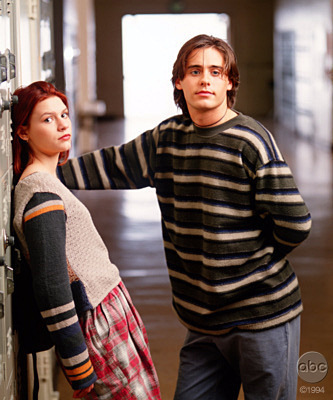
Much like Angela Chase (Claire Danes) was constantly obsessing about her crush Jordan Catalano (Jared Leto) in My So-Called Life (MSCL), I would find myself constantly obsessing over my finances.

For those of you who are unfamiliar with the show, My So-Called Life is an American teen drama television series from the 90’s that aired on ABC and then in reruns on MTV for years after it ended with only one season.

9 very important things Jared Leto taught us in the nineties

The plot surrounded a young 15-year-old girl that spent much of her time trying to figure out life and navigate being on the cusp on adulthood. The cast also just recently did a virtual reunion and reunited back together in 2020.

Now, back to my story.

I needed a fiscal safety net and plan in place that would allow me to weather and fiscal storm, including the coronavirus.

With over 33 million people filing for unemployment, I needed to shore up my resources.

My So-Called Finances needed my full attention. I was up for the undertaking.

START FROM THE FISCAL BEGINNING

Many of my lessons about money started when I was very young. I knew it was very important to have money so that you could take care of yourself and your family.

I got in the habit of saving when I was only three years old. That habit hasn’t changed. I have technically always been a saver.

However, along the way, I got lost. Kind of the same way that Alice did in Wonderland.

my gif gif disney 1950s Alice In Wonderland animation disney gif ...

I too found myself in a maze of things I did not understand. I needed those signs like Alice got.

You know the ones. They said things like; Drink me.

Drink Me Bottle | Disney Wiki | Fandom

By high school, I was an angst ridden teen with a penchant for spending. Then it hit me. Maybe I should start reading about this money stuff.

My 401(k) would be my new boyfriend.

As, time went on, I started obsessing about retirement. The hand-to-mouth existence dd not appeal to me.

I thought about what the heroine, Angela, in MSCL would do. She would probably start reading a book and asking a friend for advice.

I knew the same way Amy March did in Little Women that I would not be pauper.

Fun Fact: Claire Danes also starred as Beth in the 1994 adaption of the book.

Cover art

Therefore, I had to change some things. They say the first step to solving a problem is admitting that you have one. It hurt to see that low bank balance, but it had to be done. To know where you are going, you have to know where you are.

My So Called Life GIF - Find & Share on GIPHY

The first step was to set a goal. If I had something to aim for, then I had a purpose. The goal: A one million-dollar 401(k).

LEARN HOW TO BECOME FI

The Tools to Succeed 1. Learn skills to sell for money You need the skills to become Financially Independent (FI).

I wanted to be fiscally savvy. Therefore, I had to read. Angela started off the show reading the book, The Diary of Anne Frank.

I started my FI journey reading a Kiplinger magazine. Then from there, I started watching the Suze Orman show. I knew I didn’t want to sit at a desk for 12 years only to end up sitting at a desk for another 40. I needed a plan. Being able to escape the rat race sooner rather than later appealed to me.

I started devouring personal finance books and blogs. Some of my personal favorites are The Automatic Millionaire, The Millionaire Next Door and I Will Teach You to be Rich. Then you have to decide on a path. I chose passive investing.

That turned on the light-bulb for me. Wealth building is about action.

Did You Know: Alice in Wonderland (con imágenes) | Gato de ...

Building wealth would take time, sacrifice, and work.

PASSIVE VS ACTIVE WEALTH STRATEGIES

Some people choose to start a business, become doctors, lawyers, actors, musicians, consultants, chefs or to make their fortune. I would get mine by investing.

I still needed a career to get paid. So, I found an employer to buy time form me and I equally willing to sell time to them. You can work in the public or private sector.

You can get further up the income ladder by gaining skills in the public sector and then selling them at a markup in the private sector to arbitrage your valuable skill assets.

I picked a job in finance. Once I got that job offer, I made the choice to start investing ASAP.

The 401(k) offers a maximum contribution of $19,000 and the IRA (Traditional or Roth) offers a max of $6,000. That is a total of $25,000 annually. I got my start with 6% and a match of 3%. Then, I slowly started working my way up by increasing my contributions by 1% a year.

2. Passive strategies There are two strategies here: A. Live below your means (LBYM); B. work smarter not harder.

Your employer wants to make more off of you than they pay you. Your work will not go unrewarded, but will be under-rewarded. Therefore, it is your job to invest in yourself by saving for your retirement.

CREATE AN INVESTMENT ATM

Woman, Adult, People, Money

You must save enough to start earning large amounts of interest off your principal investment.

3. Accumulation phase Your job here is to start contributing as much as you can to your 401(k).

After, saving a 6-month emergency fund so you are no longer living paycheck-to-paycheck, start putting in every dollar you can into your accounts. Save until it hurts. Even if all you can afford is $50 a month. Save something. This will eventually become your own personal ATM.

It will be like a vending machine. You step up, put in your request, and the machine hands you what you want.

Act of kindness : Offer someone's snack leaving money on the ...

The RMD has now gone from 70.5 to 72. Therefore, you can let your money ride on the interest gravy train for an additional 1.5 years. On a million-dollar portfolio, that would mean an additional $105,000 with a 7% rate of return.

KEEPING IT PASSIVE

Building up your assets. I started with $5 and then went on to my first $100,000 and beyond. It can be done.

4. Passively build a sizable investment pool Find ways to earn income.

This can be with royalties from writing a book, collecting rent on rental properties, or renting out your parking space.

The goal is to trade time up front to build an income stream that with essentially last forever. Then you can kick back and relax.

Alice In Wonderland GIF - Find & Share on GIPHY

If you have to sell 40 hours a week or the sum of 2,080 a year, you should get something out of the deal. Simple math can change your life.

I knew that one-million could spit off $50,000 of income forever with a 5% return. I just had to get there first. When I got to the point where my next money milestone was going to be $300,000, I knew I was on to something.

FREEDOM IS THE ANSWER

Why invest so much money? It’s simple. The answer is freedom.

Free from worry over how to pay bills, over how you spend your time, and quality of life.

Money equals power.

Money lets you be more confident.

Debt consumes as it only takes from you and gives you nothing.

The way to build your confidence is through positive experiences. Paying off debt then saving and investing that money will give you that. This in turn will build your self-esteem.

My favorite scene in MSCL was the one in the episode titled, “self-esteem.”

Confidence is key my friends. It attracts things to you. In Angela’s case, it was Jordan. Oops. I meant to say Jordan Catalano. For some reason on that show, he could never just be Jordan.

So, you see in the end, that you can get what you want. You just have to be patient, ask for it, and work for it. They say ask and you shall receive. Try it. I did.

And the results are amazing.

Suze Orman’s FIRE Protection Plan During The COVID-19 Crisis: $5 Million And A 3-Year Emergency Fund

English: Writer and TV finance expert Suze Orm...
Image via Wikipedia

Here is Suze Orman’s FIRE protection gear: $5 million dollars to retire early. Really? Do tell. Care to elaborate. Absolutely.

It was around late 2018 that I heard talk of Suze Orman’s thoughts on the FIRE movement.

The rumblings in the financial blogsphere was that when Suze was asked her opinion about the FIRE movement on the Paula Pant podcast Afford Anything and she says, “I hate it, I hate it, I hate it.”

Suze told Paula Pant that $2 million isn’t enough for early retirement. At a 4 percent withdrawal rate, that’s $80,000 per year, which she says isn’t enough to protect you “when the floods come.”

“If you only have a few hundred thousand, or a million, or two million dollars, I’m here to tell you … if a catastrophe happens, if something happens, what are you going to do? You are going to burn up alive.”

The “Suze Slapdown” of ’18 was coined. And I thought watching WWE Smackdown was tough. Whew! They ain’t got nothing on Suze when it comes to laying the smackdown on finances.

She made headlines for saying that people who buy a daily latte are “peeing $1 million down the drain as you are drinking that coffee.” On Suze’s watch, spending at Starbucks SBUX is a no-no.

Let’s not drop out of corporate America on a whim and stop working. Get back to work.

Check out the tweet below that 2020 Democratic Presidential candidate Bernie Sanders tweeted out last year to see what I mean.

Suze Orman’s the sky is falling attitude about retiring early is not so far-fetched now during the coronavirus.

For anyone who isn’t up to speed on the FIRE acronym, it stands for Financial Independence, Retire Early. I am all for Financial Independence (FI).

This is me. Financial Independence: count me in!

Retire Early: slow down tito!

The focus of FIRE is to retire early by stopping the corporate grind and ending the rat race in your 30s or 40s, and not 55 or 65.

However, I am not yet ready to be put out to pasture. Luckily, other leaders in the FIRE movement gave some clarification and said that FIRE is not about stopping work, but finding your passion and earning passive income streams that keeps the money flowing.

The goal is to live life On. Your. Terms. So, I thought to myself okay. I can live with that.

Saving 25 times your current income and then retiring before age 40 without continuing to make money is risky.

The notion is that you can then afford to live off of your savings by limiting your withdrawals to just 4% of your assets each year.

Meaning if you earn $75,000 a year, then you need to save about $1.9 million before walking away from work. Money that was supposed to last starting from age 65, now has to starting from age 35.

I think what got Suze in an uproar was when an audience member asked her about her plans on FIRE that was posted on MarketWatch.

The millennial had caught the FIRE bug and she was looking to hang it up within two years.

“Well, how much money do you have?” Orman asked. “Two or three million?”

No.

“A million?”

No.

“$250,000?”

Yes, but with some debt.

“Really?” Orman could only shake her head. 

Don’t talk to me about it. If that’s what you want to do, go ahead. But 40 years from now, I hope you remember everything I’ve said.”— Suze Orman, on retiring in your 20s

According to Suze, “time is the most important ingredient in your financial recipe.”

As financial blogger Mr. Money Mustache put it bluntly: “In the interview, Suze Orman goes on and on about what might go wrong, and how you need an incredible amount of money saved to protect you, just in case. But this thinking is completely backwards – money will not cure your fear, as megamillionaire Suze proves so clearly. Most high-income people are still within just a few paychecks of insolvency, because it is possible to blow almost any paycheck, simply by adding or upgrading more cars, houses, and vacations. Physical health FIRST: Salads and barbells every day, no goddamned excuses.”

Real estate financial expert and FIRE member Coach Carson posted some great advice on Suze’s opinion: “As Paula said after the interview, we should all make a practice of listening deeply to others (especially if you disagree). If you can reserve judgment temporarily, you can always learn something.”

Coach Carson says time not money is the most precious thing we have. The biggest regret is time wasted when people are on their deathbed. People do not wish they worked more or spent more time in that cubicle or corner office.

Very true. Washington Post financial columnist, Michelle Singletary, also weighed in on the interview. She says “let’s also put this debate in perspective. Many people aren’t saving enough to retire at all – early or late.”

I remember when my portfolio hit $100,000. It took half the time to get the next $100,000 and zoom to $200,000. Next stop, $250,000. That’s right a quarter of a million.

Then I was looking to moving on up like The Jeffersons to the tune of $300,000, $400,000, $500,000 and beyond. I only move forwards. I never look backwards. I could still work for another 30 years if I want to. Without putting in another penny, if I let this money ride I could have between $1 million and $2.6 million dollars. And that is if I stop investing. There is no way I am doing that.

I live for today. I live in the moment. I stop and smell the roses. I enjoy the present, but save like I am going to live forever.

Stop worrying about the world ending today. It’s already tomorrow in Australia. – Charles M. Schulz, creator of the Peanuts

I like to plan in advance. I have a plan to create a plan.

“If plan A doesn’t work, the alphabet has 25 more letters – 204 if you’re in Japan.”― Claire Cook, Seven Year Switch

If I want something, then I go get if. I get off my duff and go make it happen. Don’t complain. Go do something about it. To quote Mindy Kaling, “We are all just a treadmill and six laser hair removal treatments from being Ryan Reynolds and Blake Lively.”

Ask for credit when you don’t need it. Credit dries up like tears in a recession. That’s just my two cents. Back in the 2008-09 recession, they cut my credit lines in half. Overnight *poof* half my credit limits were gone. Like a puff of smoke.

https://twitter.com/mjp2520/status/1243680590941097985?ref_src=twsrc%5Etfw%7Ctwcamp%5Eembeddedtimeline%7Ctwterm%5Eprofile%3Amjp2520%7Ctwcon%5Etimelinechrome&ref_url=https%3A%2F%2Fwww.greenbacksmagnet.com%2F%3Fp%3D2455%26preview%3Dtrue

The thing is that work gives us something to do. It lets humans be productive.

If you have $1.5 million at age 65, you have a much shorter retirement to spend on versus at 37.

What really makes the difference is that by age 55-60 many people are empty nesters, own a home, and already own most of their possessions.

You have a lot less things to buy because you have what you need already.

When you are 35, you may still have no kids, are just starting, or have a young family. You have costs that are still rising like inflation.

Empty nesters are not worried about paying for college. Its paid for. That’s in their rear-view. Juniors 529 is spent.

If you are still raising kids, it is likely you will need a decent income and a job. Kids cost…a lot. Most people are still buying homes, cars and having kids well into their 40s these days.

One of the biggest expenses that a job helps subsidize is healthcare.

Financial blogger Financial Samurai puts this into perspective: “Just know that once you get to your target number, you might find that your needs have changed. Life is unpredictable. A job helps you subsidize health care costs that are increasingly becoming a racket IMO, but it would help reduce our $2,380/month health care bill. However, I am grateful for every day.”

You want to retire early. Here is what Suze has to say.

Orman: “It would have to be in the millions . . . You need at least $5 million, $6 million.” (She later says $10 million to account for taxes.)

FIRE proponents fired back at Orman that she has it all wrong.

Really? When a government shutdown causes people to be in soup kitchen lines, then I beg to differ. Here were some of the things I read online during the 35-day government shutdown last year:

  • “I only have $1.06 in my bank account. I don’t know what I am going to do.”
  • “I can’t pay my bills.”
  • “I can’t afford groceries.”
  • “I’m scared I won’t be able to pay my rent or mortgage.”
  • “I can’t miss one paycheck.”

Not even one check? Even I try to keep a minimum of $10,000 in the bank at all times in savings. Just in case sh*t happens. I need that rainy day fund because when it rains it pours. Keeping a 3-6 month rainy day fund is what helps me sleep at night.

Now to be fair, the FIRE movement is about saving and investing your money. The more, the better. If you are practicing FIRE, then, in theory, you should be able to weather any storm.

Meanwhile, Orman isn’t sweating her emergence as somewhat of a villain in the FIRE community.

Now that COVID-19 has swept across the globe, it looks as if Suze may have been on to something when she always says, “hope for the best, but always plan for the worst.”

On one of her most recent podcasts she stated that a lot of her advice on saving that eight-month emergency fund has come to roost. She now thinks you need a 3-year emergency fund.

I have always been more about FI than RE because no matter what happens in this world, I know one thing to be sure; you will always need money in the bank.

Now I’m going to sign off on this post the same way Suze Orman ended her show on CNBC every night, “now you stay safe.”

So until next time…please be safe.